

My Anthony Bourdain Summer
The case for embracing #BourdainCore in 2026 (and beyond)

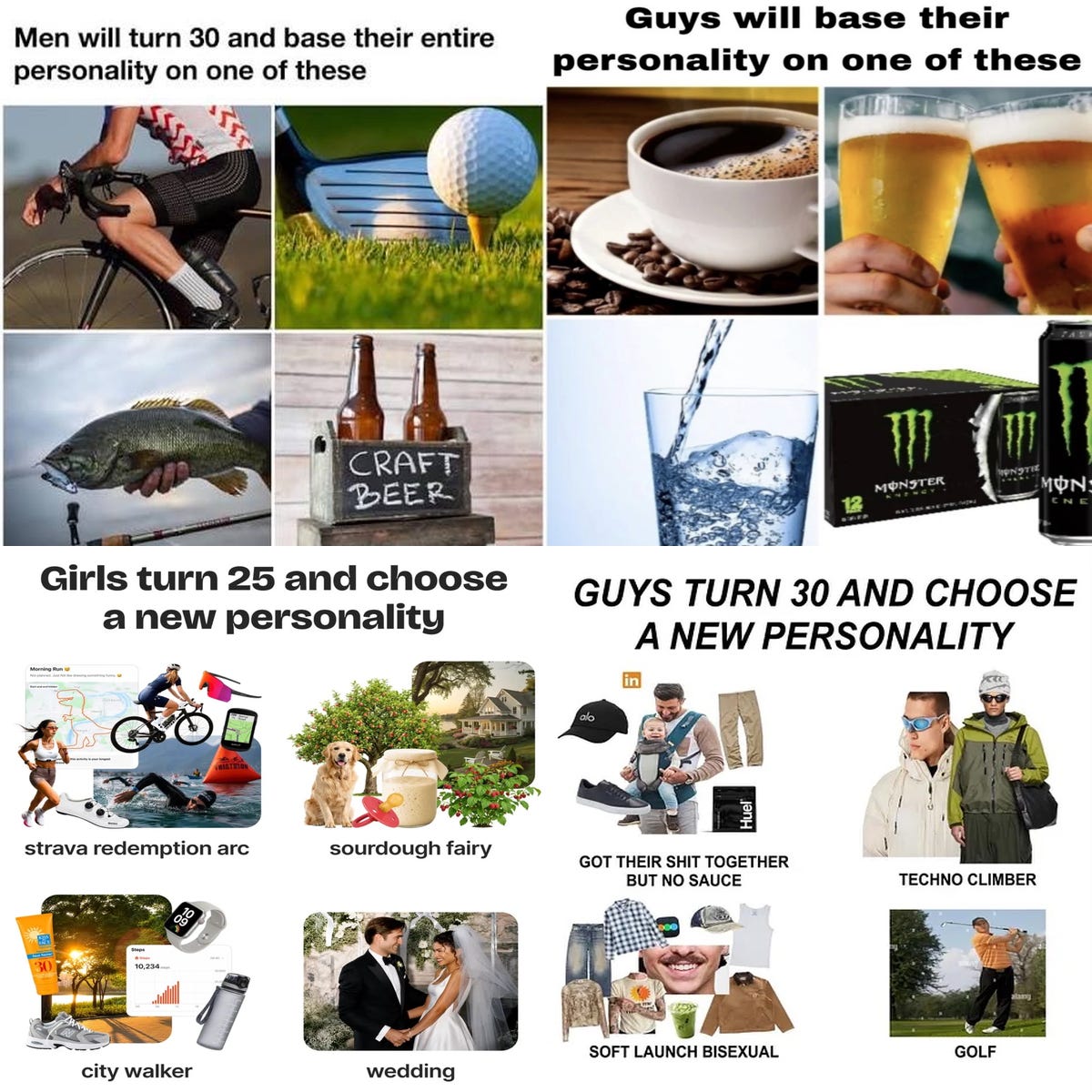
“Men hit their 20’s and base their personalities around one of these,” a meme page on Instagram informs me before dropping a list of things the men I know (me included) are obsessed with. I chuckle nervously, quickly scrolling and pretending I don’t feel personally attacked.
“People turn 30 and build their whole life around these,” a second carousel states before assaulting me with stock images of my friends’ hobbies. I smile a bit more at this one because I’ve successfully convinced myself that my 30’s are incredibly far away.
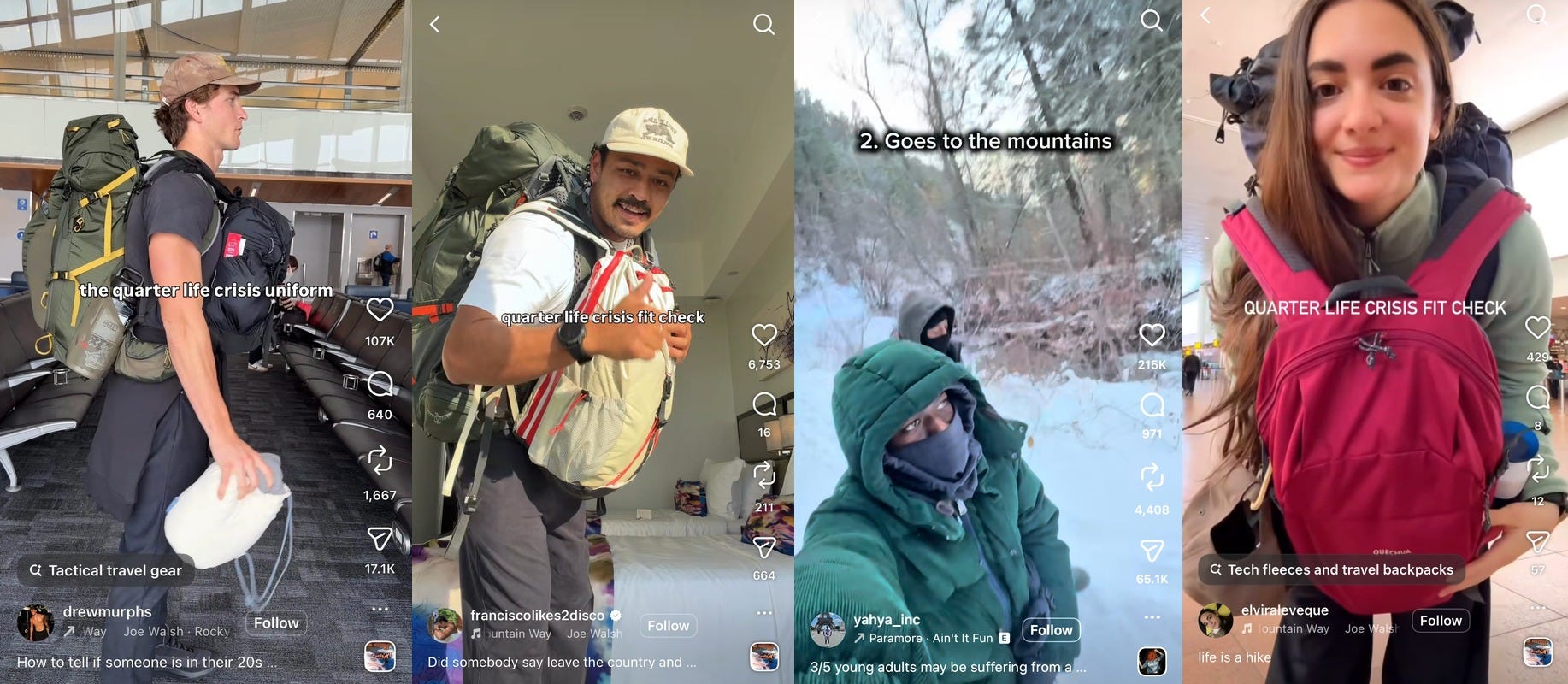
“This is the quarter-life crisis aesthetic,” a self-described “Gen Z news and culture” account declares, along with a matching photo carousel that seems to call me out so specifically that my name, address, and social security number might as well be printed in the caption.
This is what I see daily. There are no unique experiences, and this is example #4501. You can scroll through these memes and pretend it isn’t real, but it doesn’t make it less true. If you’re between the ages of 25 and 34 or know someone between those ages, you know that they are all accurate.
The explanation isn’t complicated. You get older, and your world begins to shrink. A childhood full of electives, sports, endless hobbies, and access to whatever we want to become evaporates, leaving you to build your own life brick by brick. For some, this means catapulting into a hamster wheel of work and couch-bound activities that never end, “protecting your peace” and tightly packing yourself into your own world. For others, it means running away from routine and embracing a dramatic life change. In most cases, it’s a messy patchwork of both and a muddy mess of neither.
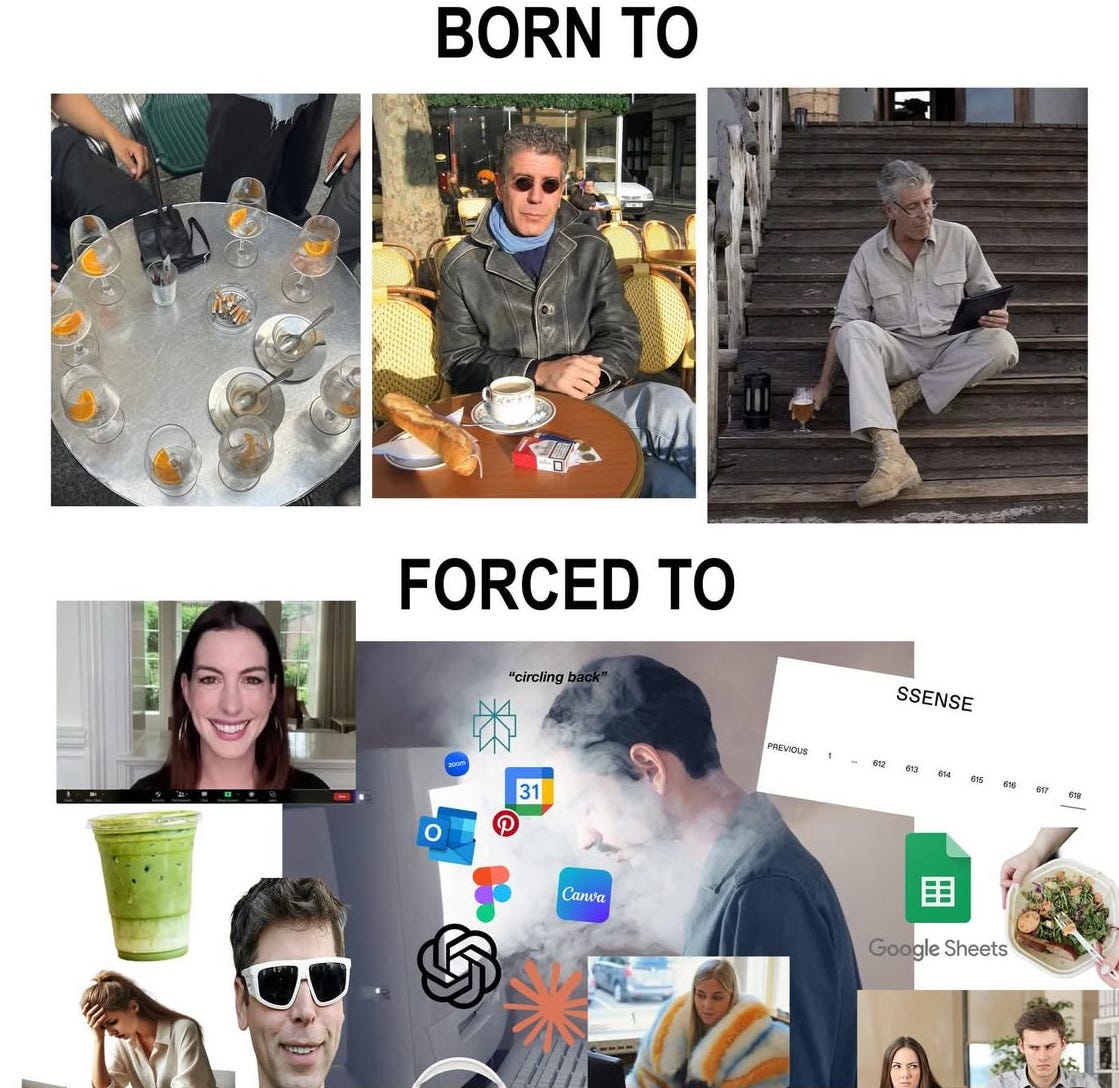
While sorting out my feelings on the sneakily fast rate at which life is flying by, I came across another version of the “xyz turns 30 and does blah blah blah” format. Under a headshot of Anthony Bourdain—amongst others—read the title “Guys hit their 20s and become one of these celebrity chefs.” Suddenly, I found clarity.
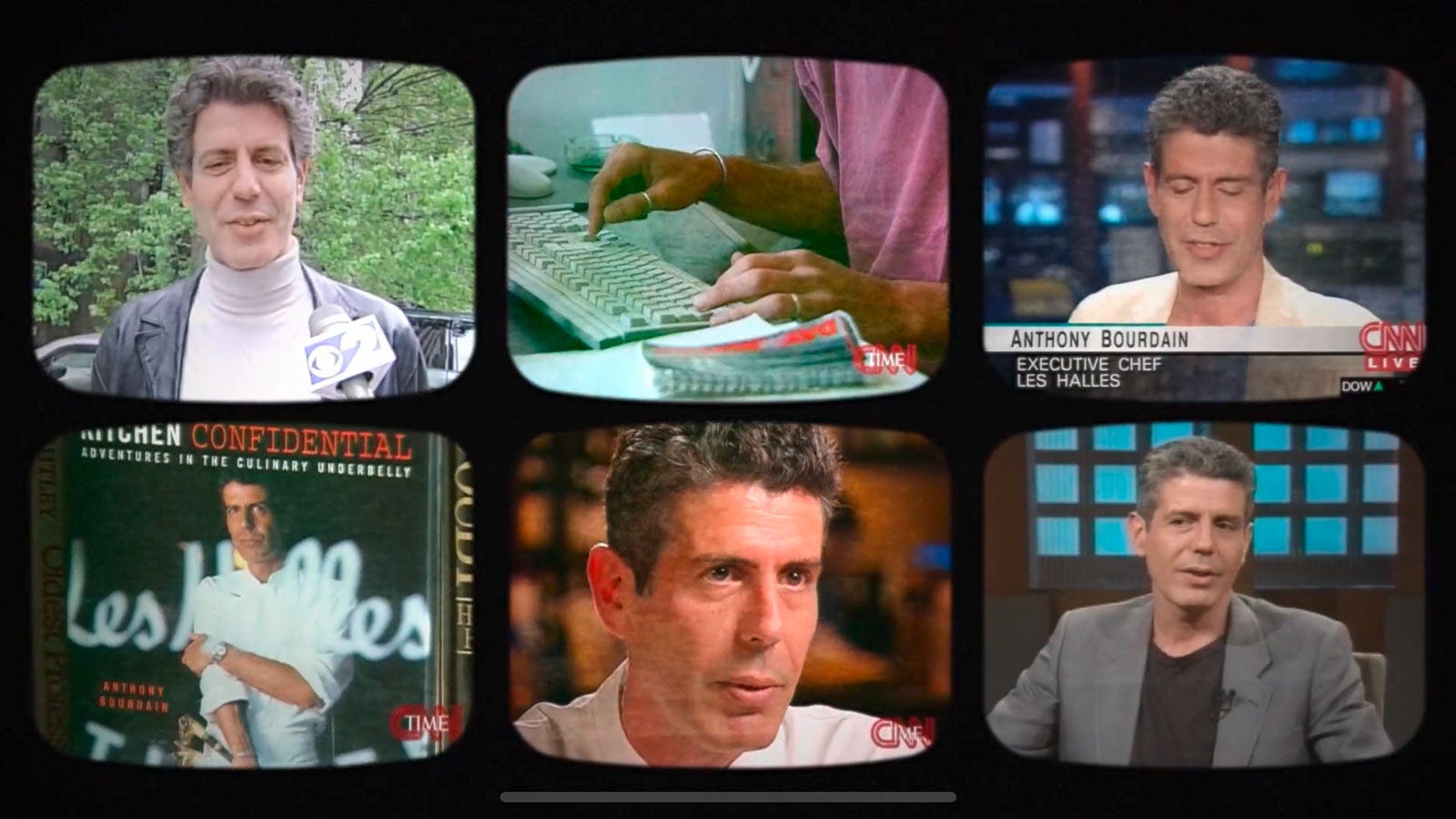
As a regular consumer of celebrity chefs across television, I’ve always known about Anthony Bourdain in passing, but until recently I hadn’t spent too much time thinking further about him. There are a few chefs I could make the case for building the early chapter of life around, but Bourdain, who would’ve turned 70 last week, existed within a specific context that is uniquely fitting to our current moment–mostly because he is already inside the fabric of so many present day pathologies.
In the marketing world, a lot is made of “cultural signals.” When it comes to selling something, no idea is ever guaranteed to make a cultural impact, but cultural signals are canaries in the coal mine that let you know the world is ready for your vision. In the case of a resurfaced appreciation for Bourdain, the cultural signals are innumerable. The immediately apparent sign is the abundance of chef-focused content. Initially revitalized by The Bear, we’ve spent the last four years watching frantic kitchens bring damaged, lovable misfits together. The concept of discovering one’s purpose in the midst of back-of-the-house madness has become widely understood, and is a key part of Bourdain’s history.
In a more direct way, the influence of Bourdain–specifically on those in their 20’s–is present to varying degrees in some of today’s public figures. For example, Jensen Adeyanju, an English YouTuber who travels to low-level soccer club matches and gets drunk with their fans. I know, it’s not exactly the same as Bourdain using foreign delicacies to comment on the broken state of international relations, but it is a branch of the Bourdain school of thinking that immersing yourself in a new tradiition and drinking is what brings people together. Jensen is a person travelling to new places, eating and drinking with regular people, and learning what makes their traditions special. Although different, IShowSpeed is a streamer essentially doing the same thing at a much larger scale, travelling the world and live streaming the entire process. The children yearn for Bourdain!
A side note: there is also a cultural guiding line to be drawn between the Bourdain approach to travel and the “endless vacation” aesthetic currently dominating the internet by way of Dua Lipa fans online. Take a stroll down a certain side of the internet and you’ll see what I mean. Images of clear blue water, empty martini glasses, and boats ready to set sail abound, each headlined with an aspirational quote about living life abroad like Dua Lipa. While I obviously see the appeal of this aesthetic, I do need to stop here to say that, to me, this is a distinctly different ideology than that of Bourdain. Although the venn diagram of travel and exploration overlaps between Bourdain and Dua Lipa, her image is decidedly more attached to something that Bourdain’s isn’t: wealth. Private planes, yachts, and lavish hotel rooms are all Dua Lipa staples and while that is very cool to look at, it is not attainable for most (especially not a generation of twentysomethings who are more likely to move back in with their parents due to financial struggles than the generation before them). This isn’t intended to shit on a woman whose music I mostly enjoy—and who is seemingly doing very positive things in the world—but I cringe when I see “live like Dua Lipa” carousels on my discover page because the lifestyle being sold by the imagery is “freedom” wrapped in capitalism, not experience.
Which brings me back to Bourdain and the quarter life crisis. Expecting an aesthetic to clarify your twenties doesn’t just fall apart when held up to the light of capitalism, it falls apart when expected to provide any actual blueprint. You want to live like [insert celebrity here]... alright, now what? You’re back where you began, wondering how to materialize your ideal life by next month.
A core aspect of my ongoing panic is the acceptance of fleeting time. The quarter-life crisis and consistent comparing only happen because of the internal clocktower that tolls louder every year. I need to rush toward my goals, not because I need them, but because if I don’t achieve fast enough, I’ll run out of time.
My lifelong fear of not having things figured out fast enough is equal parts internal pressure and competitiveness. In retracing the steps of my existence, I can pinpoint several instances where I achieved something and instead of feeling joy or satisfaction or pride, I simply felt the relief of not failing—immediately followed by the need to check the score. No life moment is complete without comparing my latest step to those around me; a brutal combination of pride in the ground I’ve covered on those older than me and shamed by the accomplishments of those younger.
Something I’ve appreciated about Bourdain's career trajectory is that it functions as the antithesis to this belief. There is no rush to the finish line because the journey is the entire point. Youth, and what one can accomplish while still early in life, only holds the value assigned to it. Liz Leatrice wrote about this and theorized that younger people put such a premium on our youth because it’s the only thing we really own in today’s economic climate. Bleak, but accurate when the root of this anxiety goes unexamined.

On his own career timeline, Bourdain once said, “I was forty-four years old when Kitchen Confidential hit—and if there was ever a lucky break or better timing, I don’t know about it. At forty-four, I was, as all cooks too long on the line must be, already in decline.” We don’t think of the culinary profession as one that you age out of, but Bourdain felt differently. “You’re not getting any faster—or smarter—as a cook after age thirty-seven... You’re basically done—or on your way to being done. Your brain knows it. Your body knows it... But pride persists.”
Pride persists. Tattoo it on my forehead. This is all that really matters. There is no ticking clock. No one is charting my career or my life, shaking their head as I “fall behind.” Pride can hold you back, but it can also be the thing that keeps you going. I sometimes think back to a time in my life where I struggled to sort things out in a post-college mid-pandemic world, half-jokingly saying things like “the only reason I can’t end it all now is that I haven’t accomplished anything yet.” What would anyone say at my funeral? “He could’ve done a lot, but didn’t.” At that time I kept going, forcefully not happily. To be clear, this is a depressing way of thinking and not one I advise anyone to copy. However, when stripped of my suicidal ideation and intense nihilism, it touched on something somewhat resembling the Bourdain career quote. There is always a next thing, even if you don’t know what it is or where it will come from. Pride persists, and so do you.
Years ago, I was laid off right before Thanksgiving. For the following few months, I tried unsuccessfully to mirror this outlook. I spent time exploring new hobbies and lying to others about how much I was enjoying the break from corporate life, but it was directionless and unfulfilling for the most part. As a rule, after once again finding myself unemployed this past Spring, I made it my mission not to spend my break from the working world in the same haze. I was going to live my life while still, in the words of Anthony Bourdain, monitoring the situation when it came to my work.

That being said, things are a bit different this time around. Before being mercifully–and predictably–freed from my last place of work, I started freelancing and making connections in anticipation of my exit. (It’s so much easier to fight career confusion when you have at least some autonomy in the mix.)
When Bourdain speaks about his aimless time between careers, he also talks about how it allowed him to realize what he loved doing. When I have worked this summer, I’ve gotten to test my creativity on creative projects with brands like Gymshark, UNiDAYS, and Pillar Magazine (more on that coming soon), and have gotten the chance to remember what I am capable of. Eight months ago, I doubted my creativity enough to question whether or not I was even in the right career field—and whether or not it was too late for me to do anything about it—yet this past Spring one of the coolest agencies in the UK trusted me to creative direct a major project on their slate. Turns out hating your job isn’t the same as hating your career. Pride persists!
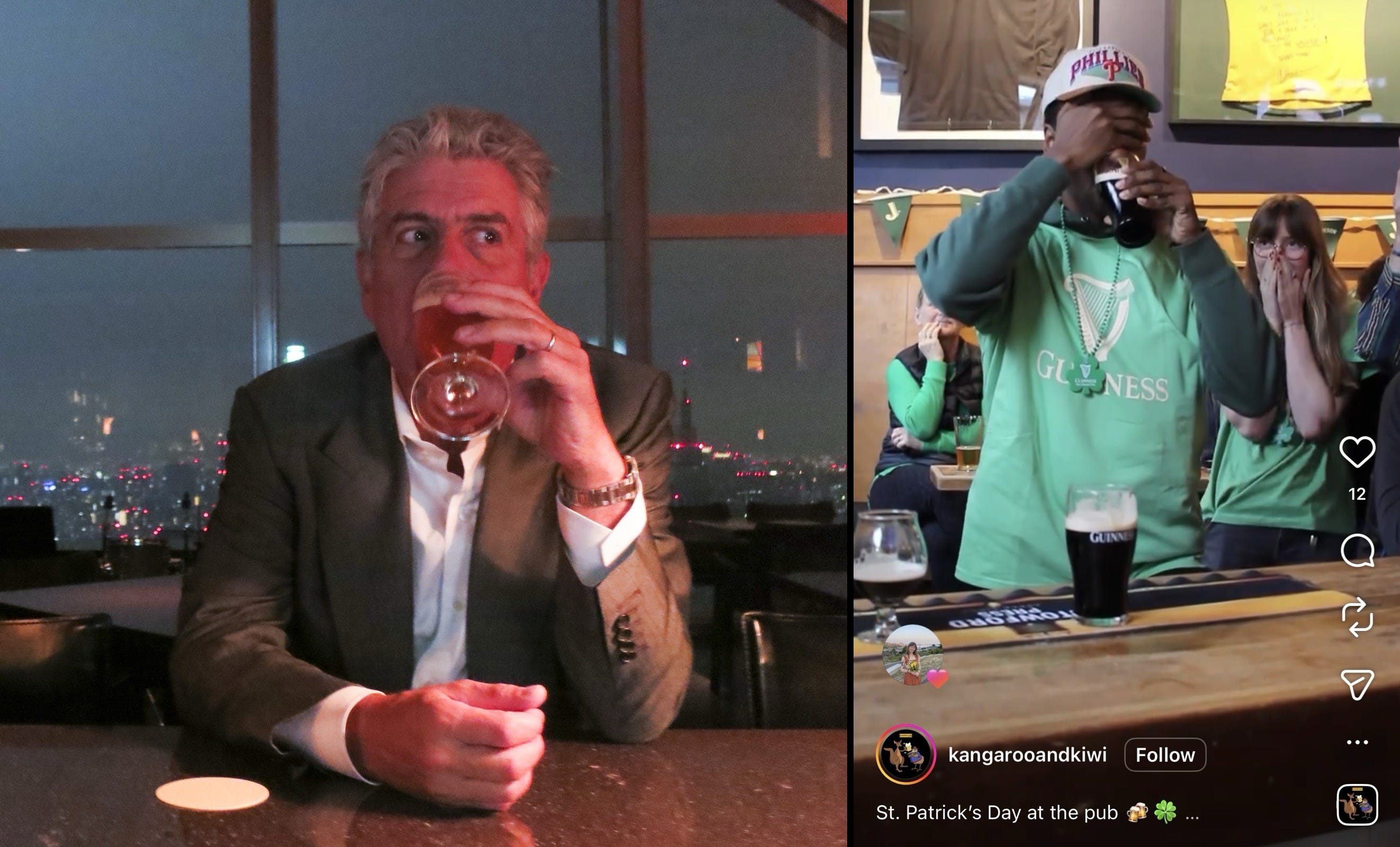
Beyond his words on career, Bourdain’s work speaks to our current social climate as well—especially when it comes to remaining open to others. For one, there’s the FIFA World Cup. As I said, one of the most identifiable Bourdain talking points is the idea that most issues can be solved by sitting down with those who are different from you. From a city in Kansas becoming the adopted home of the Algerian men’s national team to Germans learning about ranch, the value of cultural exchange is on display in ways big and small alike. As the tournament progresses, the continuation of this exchange embodies what Bourdain represented.
“You may be the most cynical, born and bred, citified lefty like me — instinctively skeptical of big concepts like “patriotism”, relatively foreign to hunting culture, unused to wide open spaces, but spend any length of time traveling around Montana and you will understand what all that “purple mountains majesty” is all about, you’ll soon be wrapping yourself in the flag and yelling, “America, fuck yeah!” with an absolute and non-ironic sincerity that will take you by surprise.” —Anthony Bourdain, “Brown Dog”
You don’t need to drop everything and empty out your bank account travelling through Africa to replicate the Bourdain experience; it can happen in your own backyard. This is, once again, existing in antithesis to the facy travel aesthetic that demands your credit card in exchange for access to new cultures. Last week, I watched Bosnian tourists drink Fireball with USA supporters in Pioneer Square. I watched a crowd that was 90% Mexico supporters embrace English visitors before their match against one another. The opportunities for this sort of overlap are on display in light of the World Cup, but believe me, they will still exist afterwards for those willing to seek them out.
Bourdain was fascinated not only by the things he could learn while meeting new people, but by how he could share that information with the rest of the world, especially back in America. Whether through his writing or his television productions, he was fiercely obsessed with creating the best work possible. With today’s influx of AI-generated garbage and anti-intellectualism, Bourdain’s commitment to hand-crafted storytelling could stand to make a comeback.
I don’t think everyone needs to start a blog about their travels or whatever, but I would encourage anyone working to grow into their next phase of life to document the process. Something I found most interesting when watching video of those who knew Bourdain speak was hearing how grateful they were to be able to watch—and revisit—his growth and change through his writing and his TV work. I understand that in an oversaturated influencer era online, we’re programmed to roll our eyes anytime someone we know starts “creating content” about what they’re doing (I’m guilty of this sometimes too), but ultimately none of that matters. Do it for yourself if nothing else. (And if you do, share it with me. I’ll support you!)
This summer, the A24 biopic Tony from Matt Johnson, director of 2023’s Blackberry and 2026’s Nirvana: The Band The Show The Movie, will release in theaters. Tony is making a decision that I think most biopics should. Instead of taking someone’s complicated, multifaceted life and speed-running it via chopped-up vignettes, the movie will focus specifically on the early kitchen experiences discussed in Bourdain’s book, “Kitchen Confidential.” Oscar-baiting biopics like Tony are cooked up every year, tossed onto the culture like a fishing net in hopes of catching enough acclaim to declare success. I won’t pretend that I can predict how this movie will do, but as a person in the afternoon of his twenties, I see huge potential for Tony to spark a resurgence in Bourdain-inspired thinking.
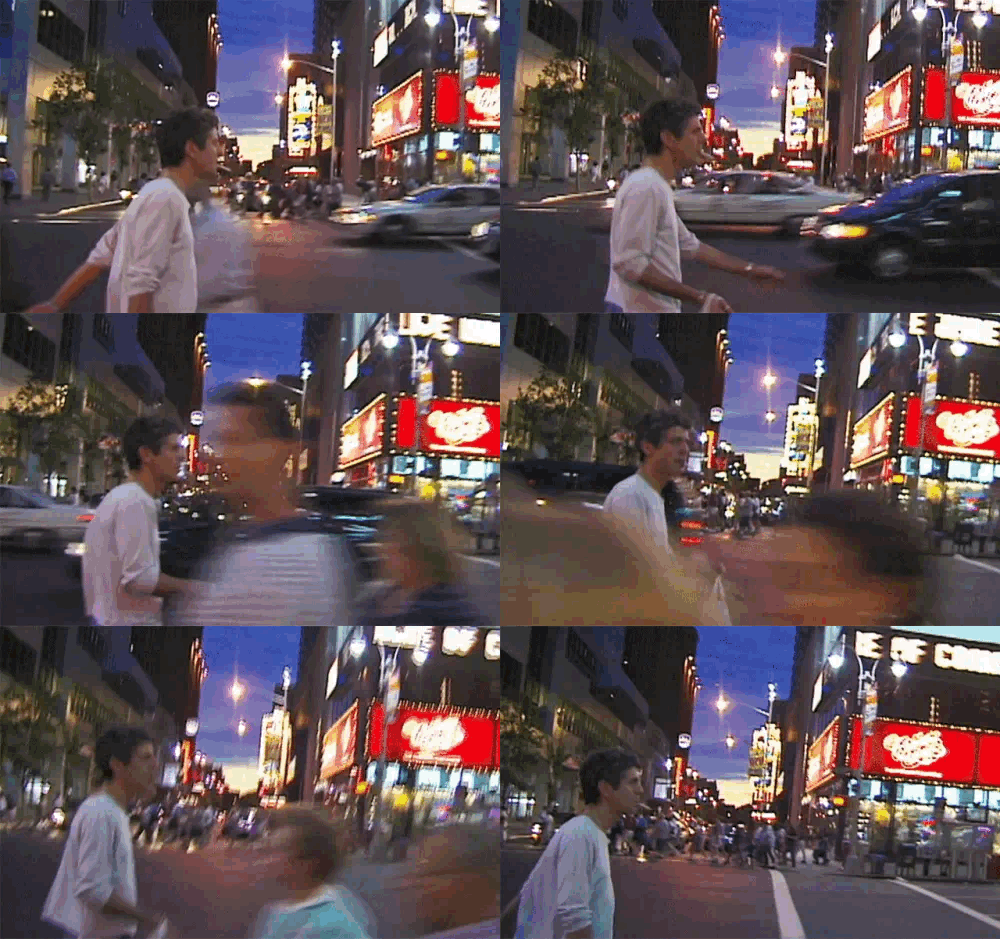
“Eat at a local restaurant tonight. Get the cream sauce. Have a cold pint at 4 o’clock in a mostly empty bar. Go somewhere you’ve never been. Listen to someone you think may have nothing in common with you. Order the steak rare. Eat an oyster. Have a Negroni. Have two. Be open to a world where you may not understand or agree with the person next to you, but have a drink with them anyway. Eat slowly. Tip your server. Check in on your friends. Check in on yourself. Enjoy the ride.” —Anthony Bourdain
And now, in a summer in which you’re the youngest you’ll ever be, America is hosting the world’s soccer tournament, and everyone in power is invested in you not appreciating the beauty of other nations, you have no excuse not to adopt the Bourdain approach abroad or in your own backyard. No passport needed.
Go out on a weekday, even if you have to be up in the morning. Shut your work laptop a little early. Try that new restaurant. Find some tourists in a different country’s jersey and learn about their team. Drink those World Cup-sponsored Buzzballs. Do NOT drink the pina colada Cutwater at the World Cup watch party. Celebrate with a stranger. Share a cigarette with a stranger. Do NOT accept that strange pill that the stranger offers you before the after-match party. Walk around. Use that Lime Bike even if you have had a few drinks. Take pictures, take notes, take your summer seriously. Make a mistake. You can always try again tomorrow. Pride persists.
