The LinkedIn Influencer Index
Choose your fighter.

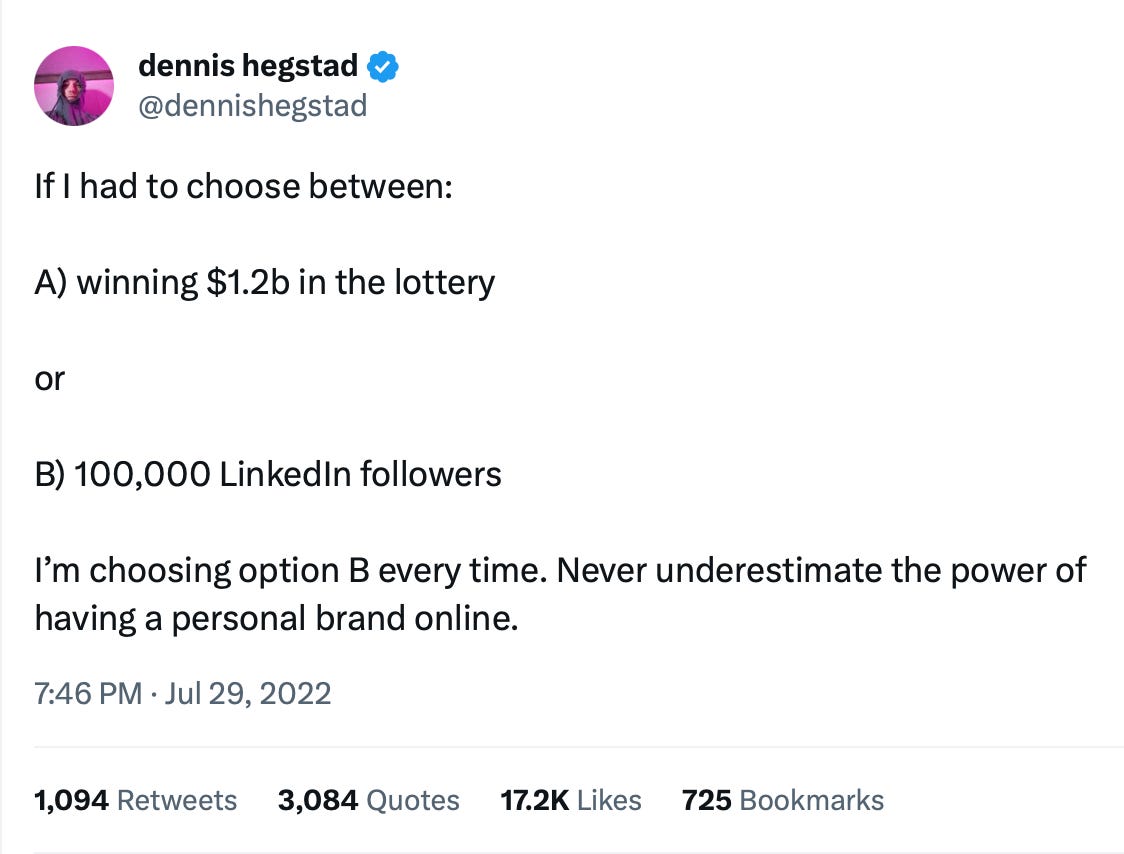
As we all know, this newsletter is a safe haven for haters. I personally have many people, places, and things that I can’t stand. A peek at my daily planner would reveal that my 2022 New Year’s resolution was to stop fixating on these obsessions. A subsequent peek at my phone (or this newsletter) would show that the majority of my time is spent pouring an almost endless amount of energy into tearing them down. In many cases I am pulling friends into my negative little thought processes and forcing them to join in. It’s not ideal and I realize that, but truthfully nothing reinforces a friendship like the opportunity to spread hate together.
I’m not here to push agendas (I definitely am) or tell you what to believe (debatable). However, I am here to ask that you join me in hating one of my more healthy obsessions: the LinkedIn influencer.
LinkedIn is a place where good things go to be slowly and mercilessly suffocated with a pillow. Sometimes people who are happy about landing a new job—or quitting an old one—rush to LinkedIn to spread their happy news with the world. These announcements are the only good things that happen on LinkedIn. Every other post on LinkedIn comes from an entrepreneur, a “CEO,” or a recruiter who is desperate for for you to interact with them.
The fun thing about these entrepreneurs turned influencers is that they never call themselves “influencers” because LinkedIn is allegedly a business networking site for professionals. Because of this, every LinkedIn advisor you encounter will have the lengthiest, most convoluted headline you have ever seen. Anyone with an internet connection and an unnecessary thought about the job market will blanket themselves in a mountain of qualifiers. This is not because they should be listened to, but because no one will take them seriously if their job title is “professional attention seeker.”
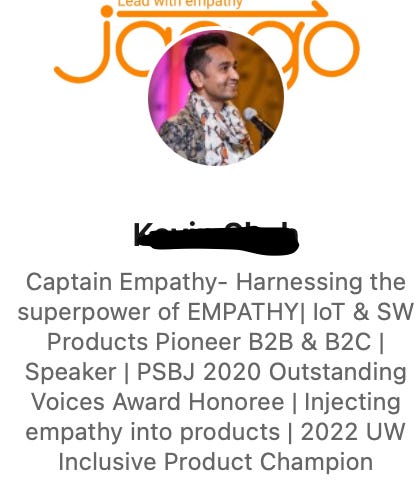
Take this user for example. I’ve hidden his name for the sake of my privacy, I would hate for his loyal stans—almost 7,000 followers on LinkedIn—to find me and force me to network with them as punishment. One glance at this profile headline will have you scratching your head. What does it mean to be “Captain Empathy” or to “inject empathy into products” you ask? I have no idea and neither does anyone else! The beauty of LinkedIn is that you can literally just throw a bunch of noteworthy sounding things you’ve done into a box and start digging for likes. This how recruiters build networks and people with nothing else going on build brands.
I can’t explain it fully, but every LinkedIn influencer gives off a very specific and sinister energy. Each one wears the smile of someone who won “most likely to be famous” in high school 15 years ago and is still trying to live up to that title in the most desperate—and least effective—way possible. It’s a rude generalization I know, but I’d estimate that 90% of the alleged entrepreneurs/CEO’s on this site peaked at the age of 17. A lifetime of pressure from the year they were class president has broken them down and forced them into this.

Regardless of their questionable past, I’ve come to the conclusion that every one of them fits into one of the following categories:
The Panderer
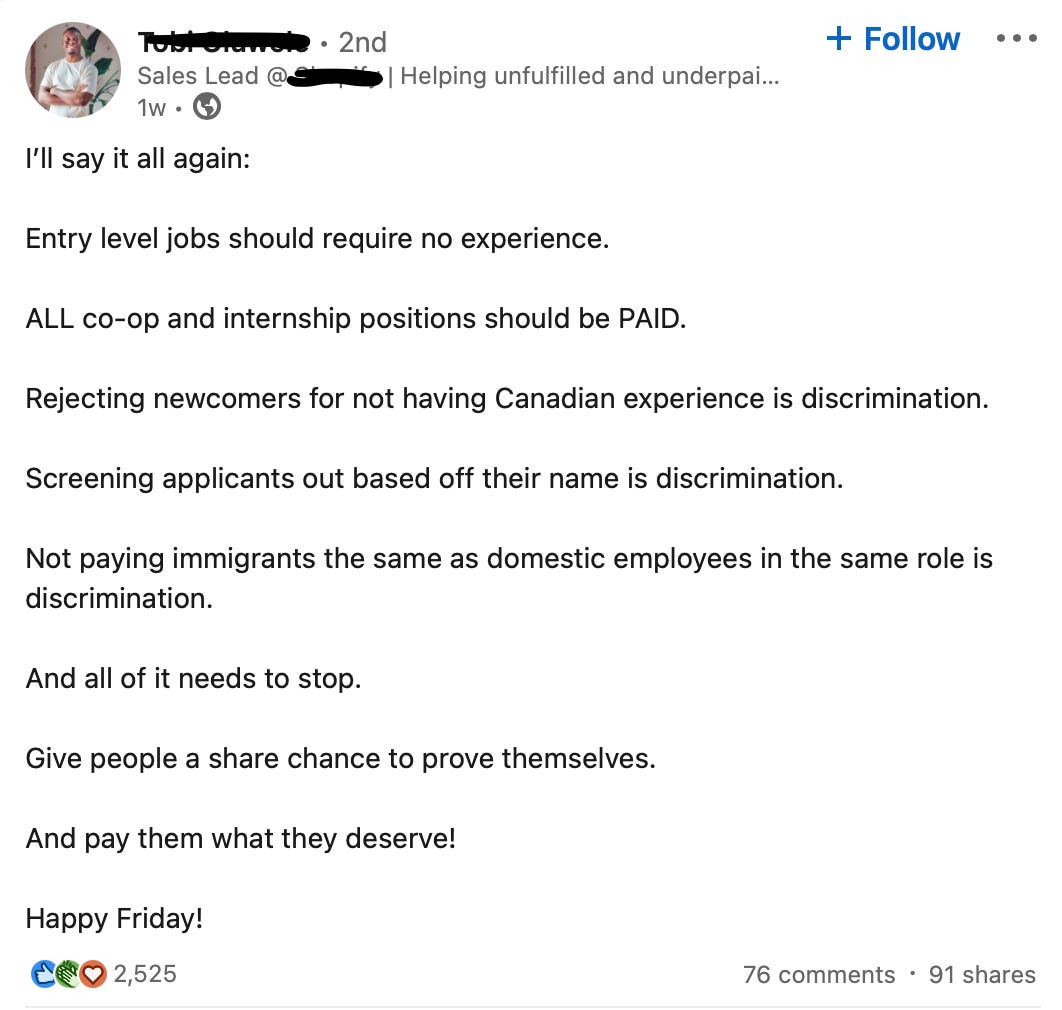
The panderer is by far, the most frustrating LinkedIn archetype. It is soulless and it is annoying, but above all else: it’s boring as hell! Delivering widely agreed upon statements for the timeline is, in my experience, the easiest way to thrive in the LinkedIn economy. No critical insights or thoughtful offerings, just freezing cold takes and vibes. The comment sections of these posts look exactly how you think they do. Although it is the most annoying, it is not the worst. Partially because although we know these opinions are obvious and meant to garner easy likes, there is some part of me that knows these types of posts have the chance to reach people who don’t actually agree. Is it likely that a LinkedIn post about equality is going to change someone’s mind? Maybe not. But I prefer to save the majority of my hatred for those who really deserve it. For instance…
The Hustler
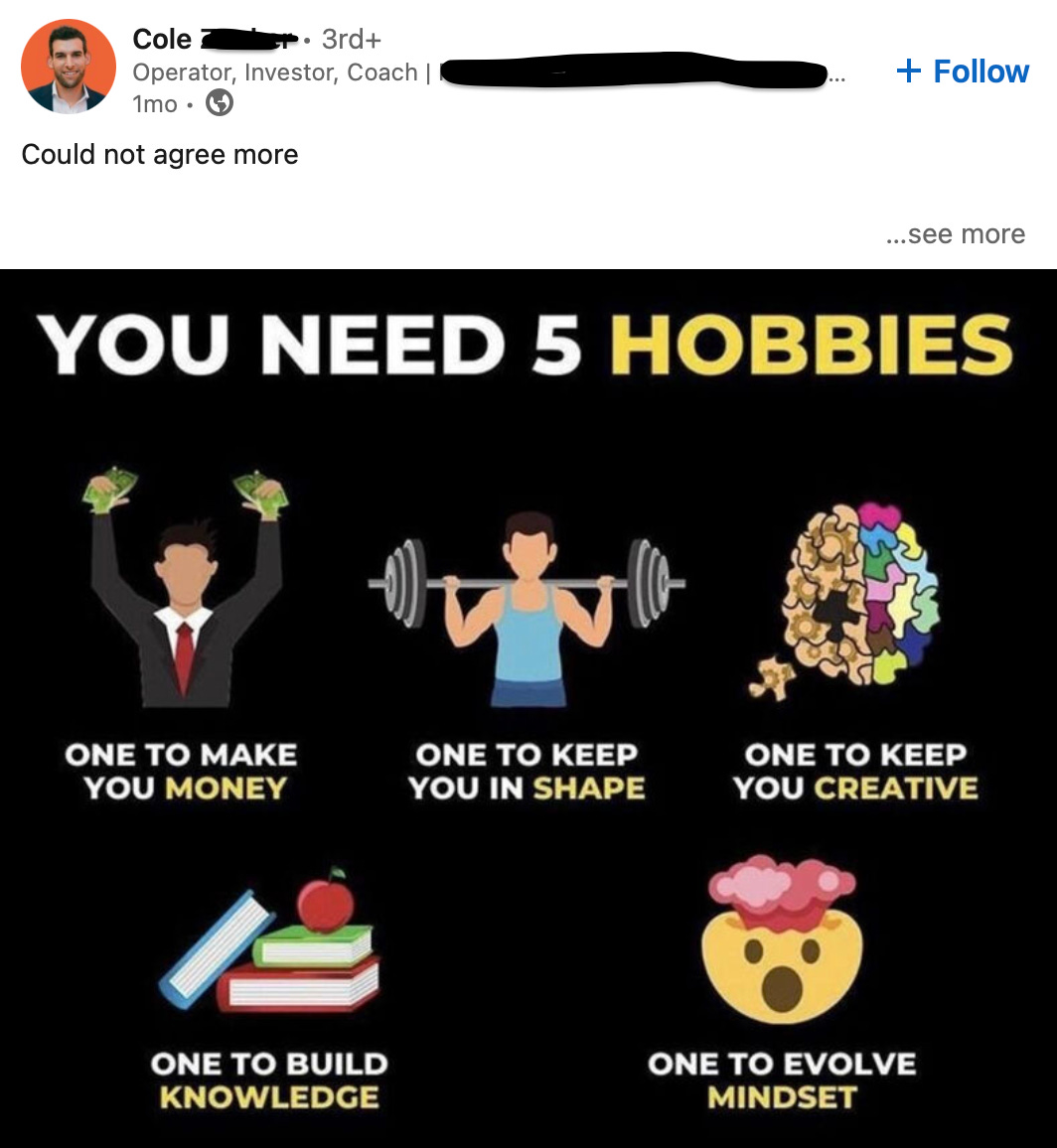
The Hustler is the default personality choice of the LinkedIn economy. The large majority of people in this category are, to be kind, the absolute worst. They saw The Wolf of Wall Street once and immediately made it their entire personality. Nothing matters to them but the #Grindset mentality. These influencers spent their four (or five, or maybe six!) years of college struggling to pass “Intro to Business,” falling for Instagram pyramid schemes, and yelling “Bro who do you know here?!” at the worst house parties imaginable. The post above is the evil twin of those bright Instagram infographics that circulate every time something bad is happening in the news. For every “Here Are 5 Ways To Fight Racism In Your Workplace :)” post, there’s someone on LinkedIn uploading an image to remind people that one of their hobbies needs to able to “make you money.” It’s a vicious cycle.
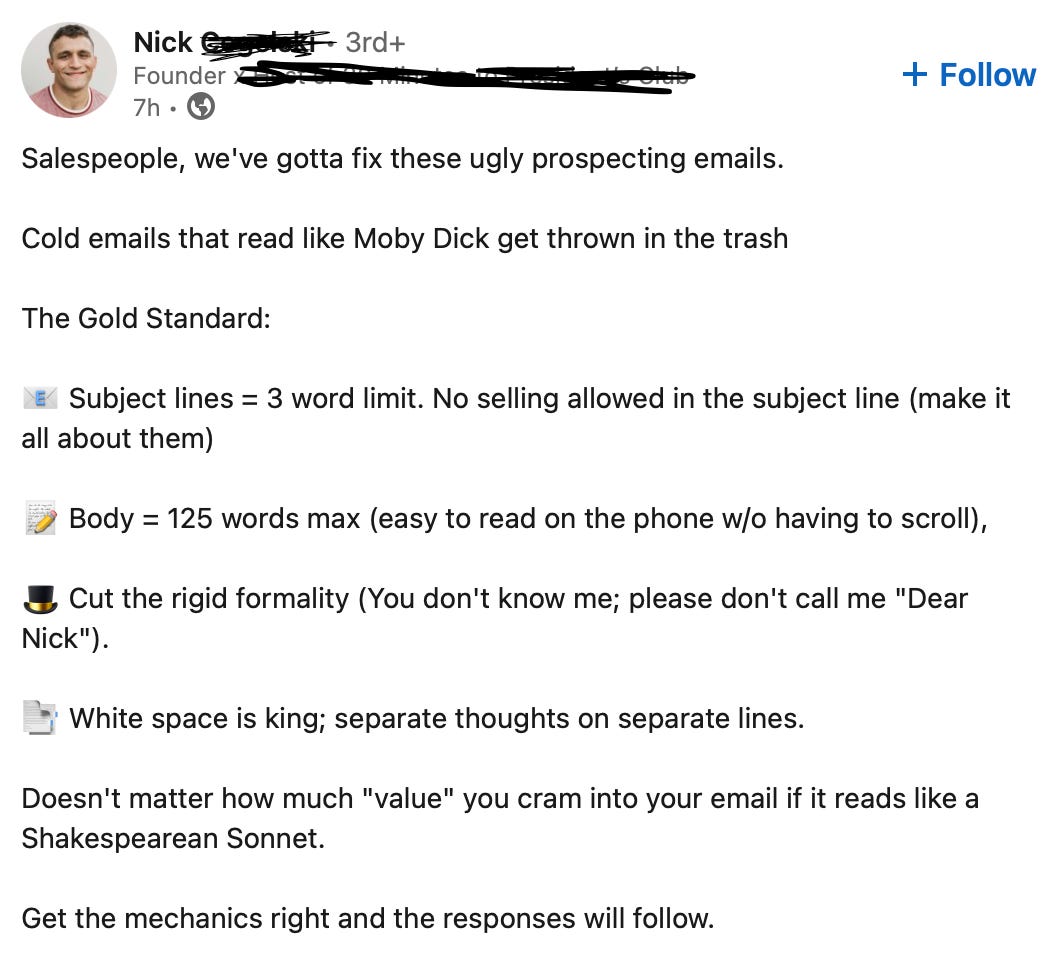
The Hustler takes many forms. Above is one of the alternate versions of this type of influencer, in which the hustle mentality is rebranded as advice. There isn’t much more to say about this one, but before we move on I’ll throw this in:
Ranking My Favorite Advice In This LinkedIn Post:
“You don’t know me; please don’t call me ‘Dear Nick’” is an obvious winner. Why so aggressive? What do you have against such a generic greeting? As a hater myself I have nothing but respect for the pointless disdain.
The line “white space is king” out of context easily comes in second place here. Is it advice for a young sales professional or something you’d see written on a sign at a “blue lives matter” rally? We can’t possibly know. Points for versatility.
“Doesn’t matter how much ‘value’ you cram into your email if it reads like a Shakespearean sonnet.” I’m no sales expert but I’d say writing Shakespeare for potential clients would absolutely be a game changer. I delete 90% of sales emails without even opening them, but that number would decrease like crazy if people would start writing me poems. Bad advice, bad post, tomato tomato, booo, etc.
The Storyteller
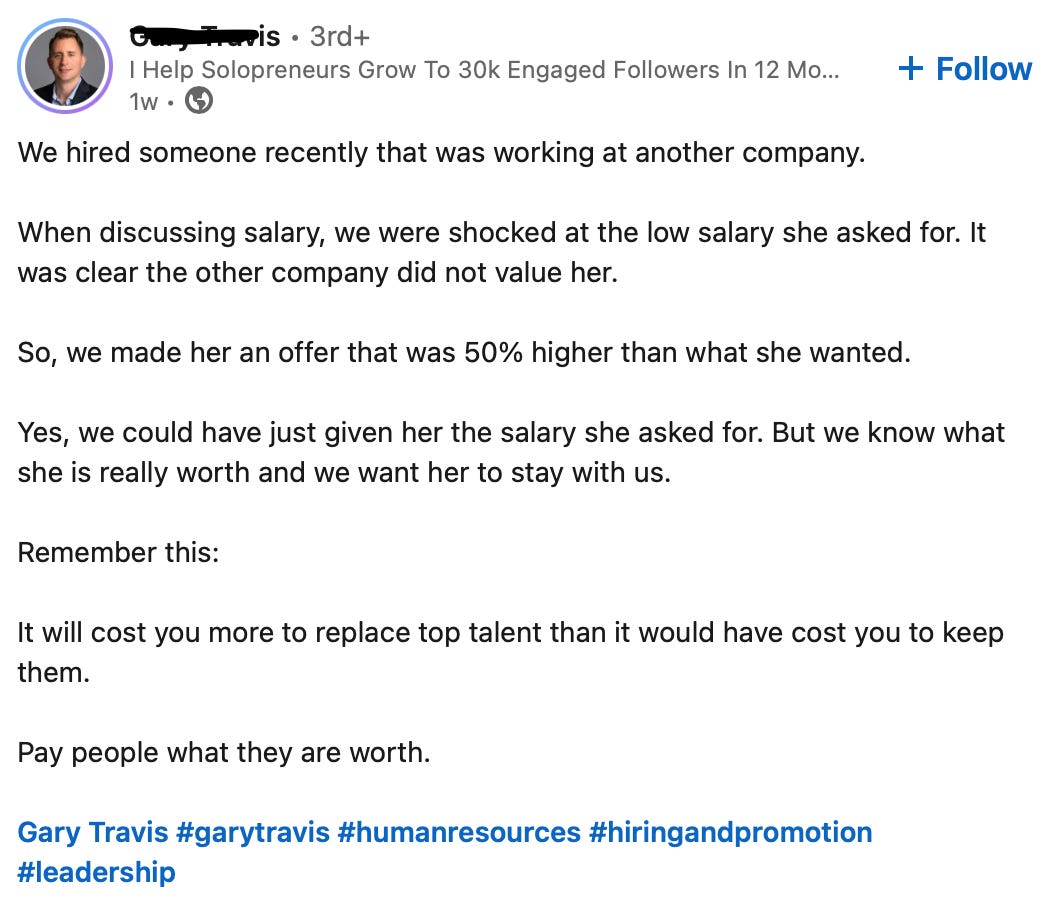
Here we have another riddle of a bio. “I Help Solopreneurs Grow To 30k Engaged Followers In 12 Months Or Less While Building Multiple Income Streams” his headline reads. He helps “solopreneurs” grow what more could you need to know? I did too much digging through his profile and even if you offered me $2 billion right now, I could not begin to tell you what a solopreneur is. I assume it’s just an entrepreneur who works alone—not really possible considering everyone needs help to run a business but whatever—and, if that’s the case, hard pass.
Despite the frustrating bio, this is one of the more popular archetypes on LinkedIn. The storyteller has something incredibly simple and unimpressive to tell you, but first you must sit through an equally simple and unimpressive story. At the very least, I admire the showmanship.
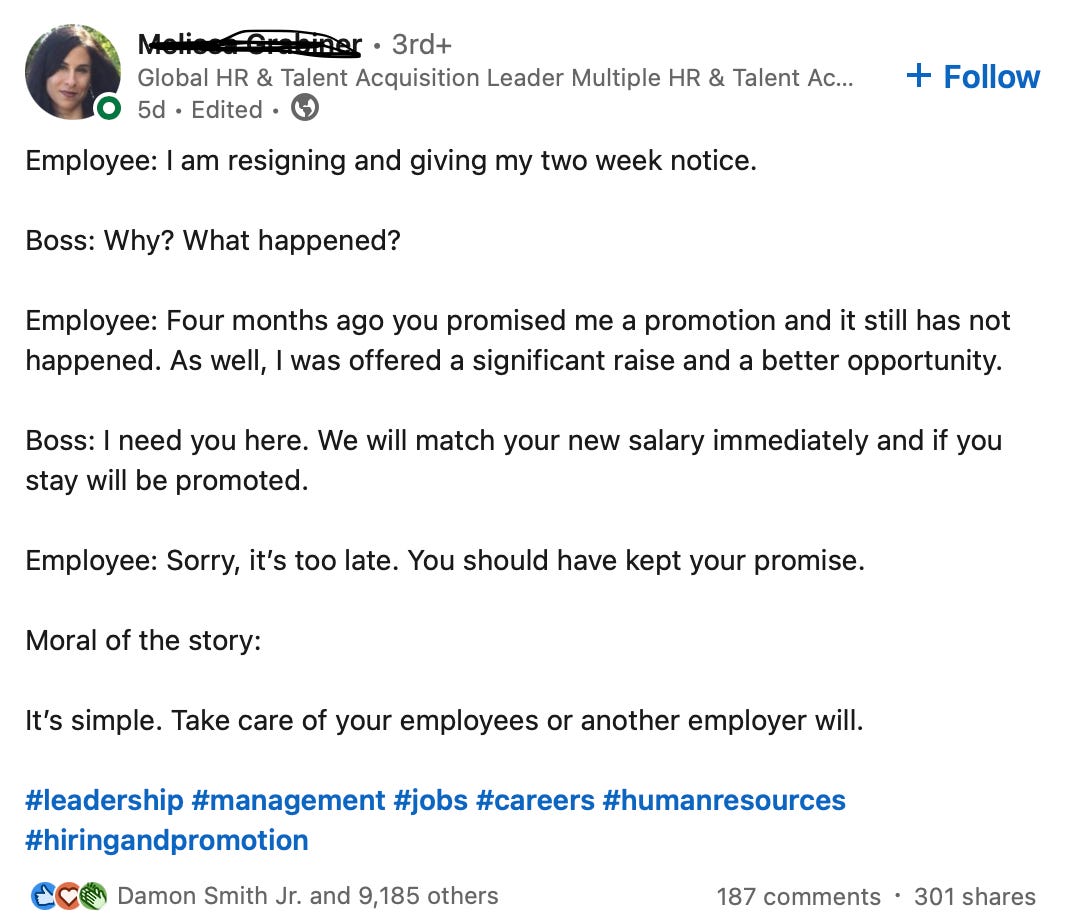
Sometimes the storyteller writes in the form of script. As a general rule, this format means the writer really wants to emphasize how deep their message is. Did I mention the story is always spaced out like it was written with a minimum page requirement? Fifty percent of your LinkedIn fairy tale needs to be blank canvas. Why you ask? Because like we learned earlier: WHITE. SPACE. IS. KING.
The Comedian
Finally we have my favorite person on LinkedIn. Not because I enjoy their content, but because it is the purest form of chaos. I do not know this for sure, but I’ve convinced myself that everyone who makes jokes on LinkedIn is doing it in a surrealist “Eric Andre at the RNC” way and not in the way that a desperate clown begs for attention.
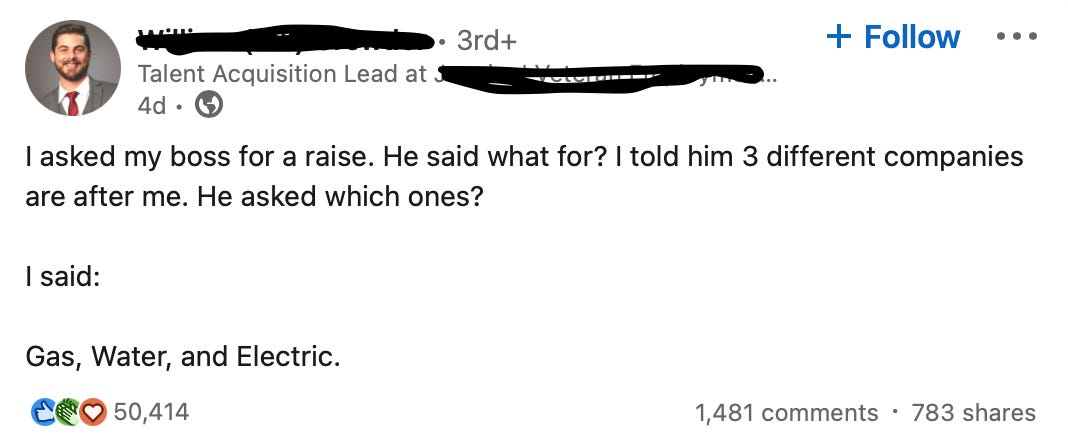
Posts like these are so much funnier if you assume that the person on the other side of the computer is hitting “post” and then laughing with his coworkers about how dumb LinkedIn is.

I am convinced that this is the only way we can make LinkedIn a welcoming environment for those under the age of 40. Slowly, we must act together to turn LinkedIn into a completely different platform. Just once a week, I would love for everyone I know to take something from their Twitter drafts and post it on LinkedIn instead.

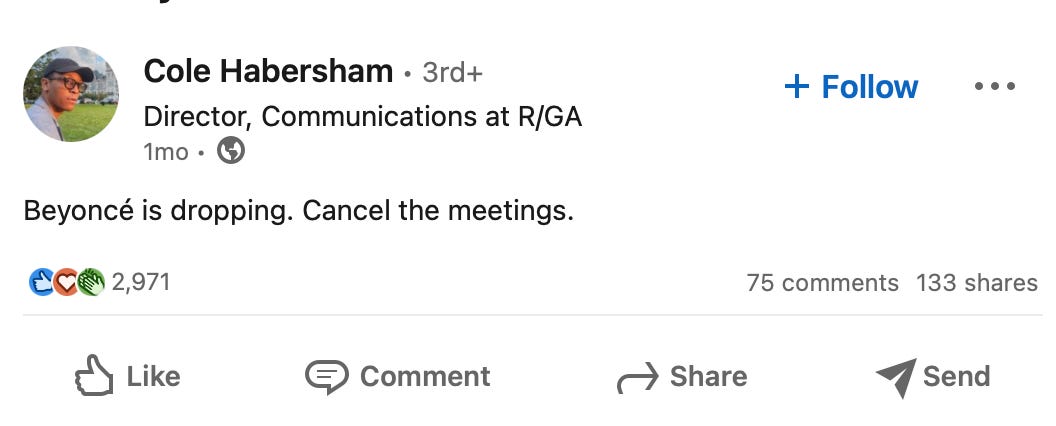
Cole Habersham gets it. I’m not scribbling out his name because he deserves attention for the groundbreaking work he’s doing. Everyday I see something on TikTok about how people want to “make Instagram casual” but that’s actually my vision for the current hellscape that is LinkedIn.
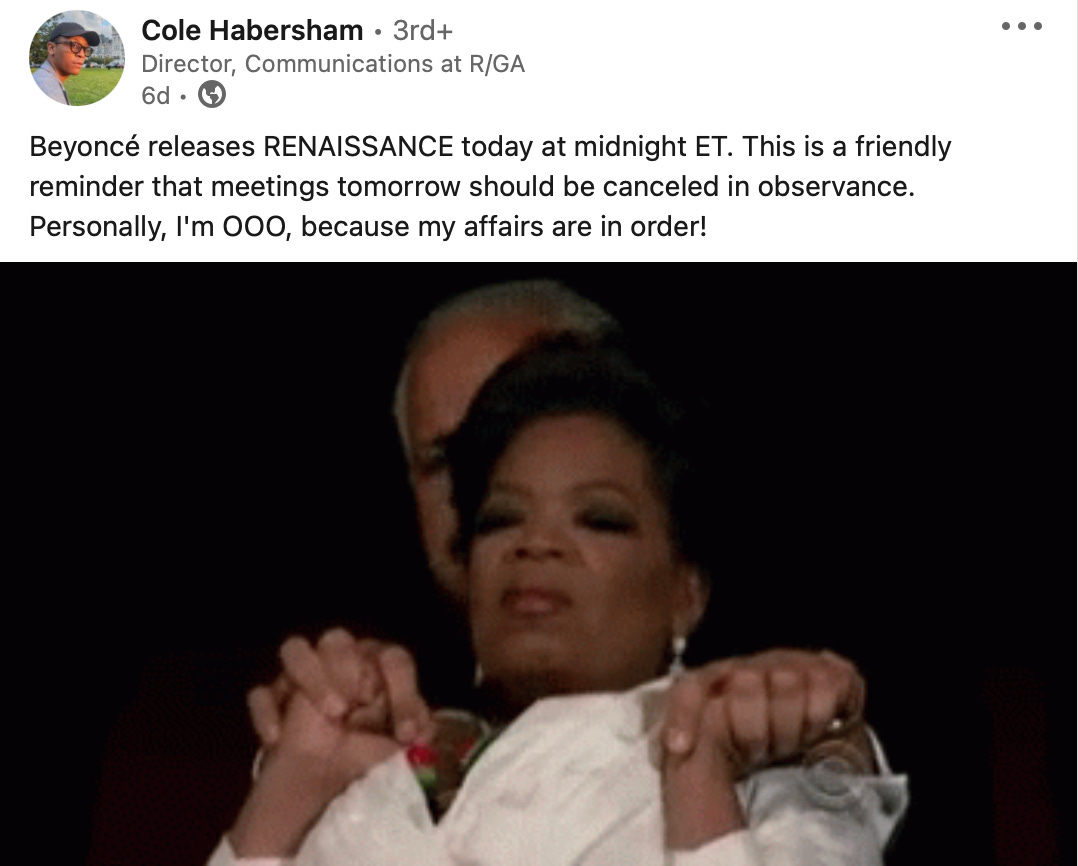
It starts with little jokes and comments and before we know it, we’re shitposting on LinkedIn Stories and announcing jobs on LinkedIn Reels with whatever new dance is trending. The only thing left to do now is log onto your LinkedIn account, get your shit, and start posting. Please tag me in your posts, I have memes on deck and I’m ready to “network.” The more casual and unrelated to your profession the better. Just remember the single most important key to success: white space is king!